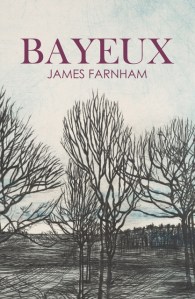
Bayeux immerses the reader in the customs and mores that prevailed at a pivotal time in the UK’s cultural history. The ‘Sixties’ was a decade of two fascinating halves: psychedelia, Biba and second-wave feminism were not properly underway until well after 1965. By contrast, the first half of the decade represented a cultural continuation of the postwar era, stifled in its austere reserve and misogyny. It is this earlier period that has shaped the language and moral compasses of Elizabeth, Adam and Helena, who manage through sheer resilience to recalibrate their lives after being trapped in what is generally regarded to be society’s most shocking taboo.
There are numerous excellent books about the 1960s, but here are four that were particularly useful in writing Bayeux:
White Heat: A History of Britain in the Swinging Sixties 1964-1970, Dominic Sandbrook
https://dominicsandbrook.com/books/white-heat-1964-1970-v-2-a-history-of-britain-in-the-swinging-sixties
How Was It For You?: Women, Sex, Love and Power in the 1960s, Virginia Nicholson
http://www.virginianicholson.co.uk/how-was-it-for-you-1
Sixties Britain, Mark Donnelly
https://www.taylorfrancis.com/books/mono/10.4324/9781315835020/sixties-britain-mark-donnelly
From A to Biba, Barbara Hulanicki
https://www.vam.ac.uk/articles/from-a-to-biba-by-barbara-hulanicki
All of the above, along with help from several experts on the 1960s (particularly in relation to historical adoption procedures in the UK and France) have helped to shape the novel’s narrative. In a very few instances some factual licence has been taken to fit the story (e.g. with Whistlejacket in the National Gallery) – but it serves as a reminder that Bayeux is a work of fiction.
 Bayeux, a novel